

Now Reading: THE COLLATERAL REVOLUTION: Central Bank Moves to Unlock Billions in Movable SME Assets
-
01
THE COLLATERAL REVOLUTION: Central Bank Moves to Unlock Billions in Movable SME Assets
Advertisement

THE COLLATERAL REVOLUTION: Central Bank Moves to Unlock Billions in Movable SME Assets


Advertisement
MBABANE – For decades, the primary roadblock to scaling a business in Eswatini has been an unyielding, traditional banking rule: If you don’t own a brick-and-mortar building or land, you don’t get the loan. This morning, the Central Bank of Eswatini (CBE), in an aggressive partnership with the Alliance for Financial Inclusion (AFI), moved to completely dismantle this credit barrier. In a high-level stakeholder workshop featuring commercial banks, micro-lenders, and key government ministries, the CBE laid down the national roadmap to establish Eswatini’s first Movable Collateral Registry.
This reform is set to fundamentally change how capital is accessed in the Kingdom, allowing entrepreneurs to secure credit using the actual operational engines of their businesses.
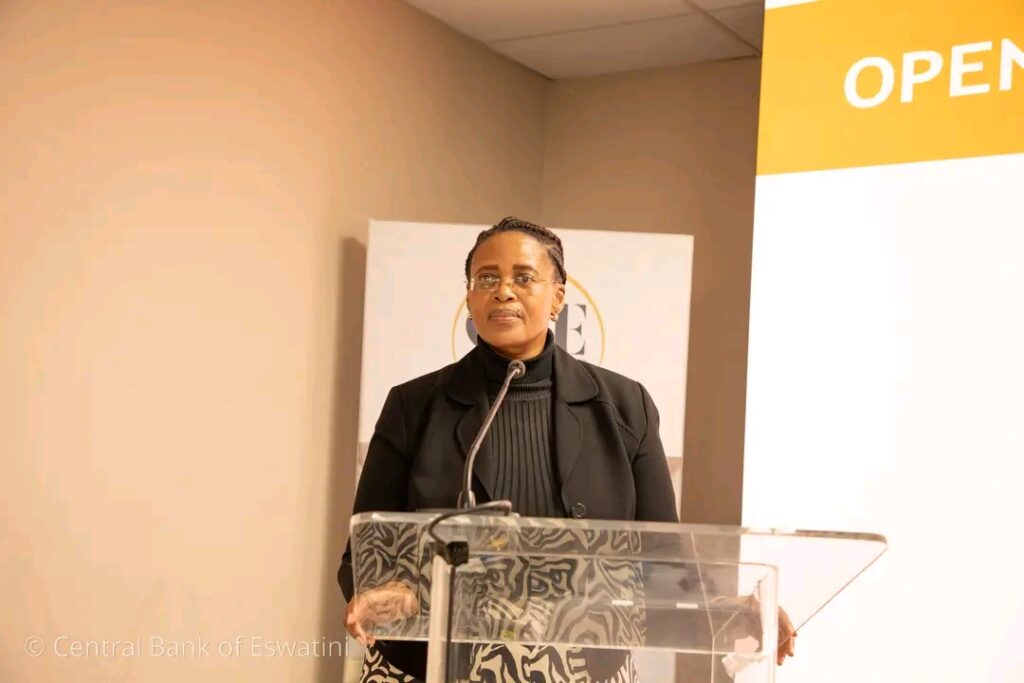
1. Shattering the “Immovable” Bias
Opening the session, CBE Director of Financial Regulation, Lungile Dlamini, targeted the core inefficiency in the current banking model. While commercial lending frameworks rely almost exclusively on immovable real estate, the vast majority of productive wealth held by local entrepreneurs is completely fluid.
Under the new registry framework, EmaSwati will soon be legally empowered to leverage alternative high-value assets as formal loan collateral, including:
- Industrial & Agricultural Assets: Heavy machinery, commercial vehicles, livestock, and standing crops.
- Operational Liquidity: Business inventory and accounts receivable (invoices).
- The Modern Frontier: Intellectual property (IP), brand assets, and proprietary systems.
2. A Targeted Play for Women-Led MSMEs
This is not merely a technical registry upgrade; it is a deliberate socioeconomic intervention. The lack of traditional land ownership documentation has historically locked women entrepreneurs out of mainstream commercial financing.
By anchoring this initiative in the National Financial Inclusion Strategy 2023–2028 and the Gender Inclusive Finance Roadmap, the Central Bank is systematically forcing a shift toward fairness. The registry will democratize credit, transforming dormant business equipment into immediate, liquid purchasing power.
📈 THE SOURCE VERDICT
THE ANALYSIS: This is the most progressive regulatory shift out of the Central Bank this quarter. Traditional banking systems have stifled the SME sector by valuing concrete walls over cash-generating business operations. By establishing a formalized, transparent registry for movable assets, the CBE is mitigating risk for commercial lenders while simultaneously opening up a massive secondary lending market.
THE ENTERPRISE TAKEAWAY: Commercial banks and micro-lenders must immediately begin updating their credit scoring models and risk assessment frameworks. Once this registry goes live, the banks that are fastest at valuing and processing movable collateral will aggressively capture the market share of Eswatini’s multibillion-emalangeni SME sector.
THE VERDICT: A magnificent, overdue economic modernization. Turning machinery, livestock, and intellectual property into bankable assets creates absolute liquidity in a market that desperately needs it. Execution over old theory wins.
🔔 POSITION YOUR ENTERPRISE FOR CAPITAL SCALE
The rules of business banking in Eswatini are changing right now. Don’t get left behind by rigid financial models.
Click the BLUE SUBSCRIBE ICON at the bottom of your screen to join our elite circle of executives, entrepreneurs, and financial innovators receiving real-time regulatory updates and market insights directly to their devices.
🔵 CLICK TO SUBSCRIBE & ENABLE NOTIFICATIONS










Advertisement

Related Posts



Stay Informed With the Latest & Most Important News
Previous Post
Next Post







Advertisement