

Now Reading: PREPARING FOR LEADERSHIP: Minister Pholile Shakantu Leads Eswatini Delegation as Incoming SADC Organ Chair
-
01
PREPARING FOR LEADERSHIP: Minister Pholile Shakantu Leads Eswatini Delegation as Incoming SADC Organ Chair
Advertisement

PREPARING FOR LEADERSHIP: Minister Pholile Shakantu Leads Eswatini Delegation as Incoming SADC Organ Chair

Advertisement
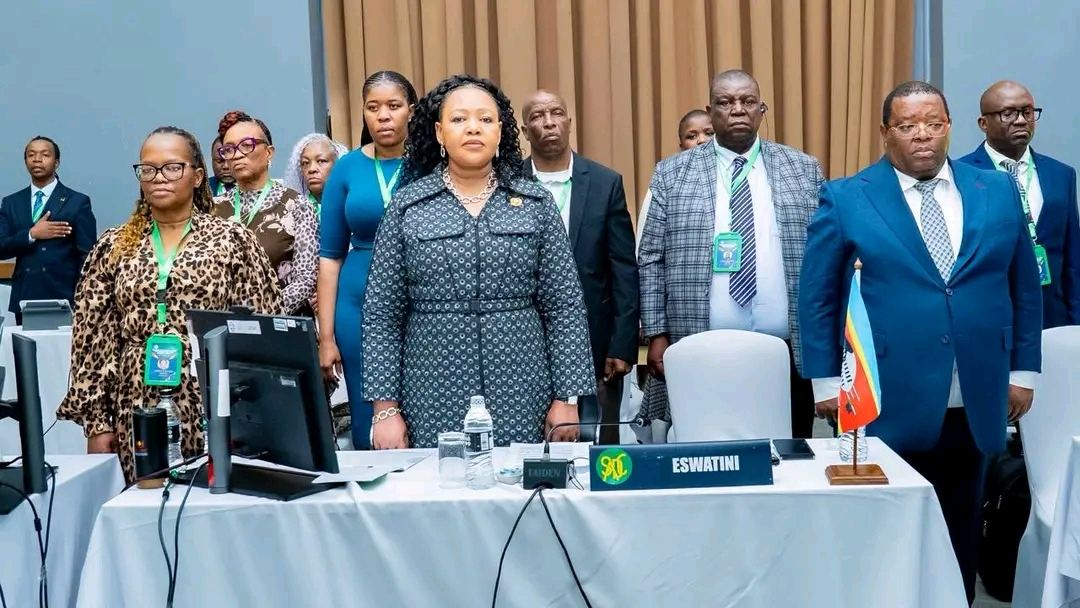
The Kingdom of Eswatini has firmly positioned itself at the forefront of regional diplomacy and security architecture. Minister of Foreign Affairs and International Cooperation, Senator Pholile Shakantu, successfully led Eswatini’s high-level delegation to the 28th Session of the SADC Ministerial Committee of the Organ (MCO) on Politics, Defence, and Security Cooperation.
The pivotal session, convened in Salima, Malawi, from July 16–17, 2026, marked a strategic transition phase as Eswatini prepares to officially assume the incoming Chairmanship of this critical regional body. Expressing high praise for the Eswatini technical team’s rigorous groundwork, Senator Shakantu confirmed that the Kingdom is fully equipped and strategically prepared to execute its responsibilities when His Majesty King Mswati III formally takes the Organ’s Chairmanship at the upcoming SADC Summit.
During the summit, SADC ministers endorsed a sweeping, forward-looking package of structural measures engineered to fortify regional peace, enhance democratic governance, curb corruption, streamline migration management, and actively defend the region’s shared liberation heritage.
A Multi-Pillar Strategy for Regional Peace and Stability
The 28th Session outlined a comprehensive blueprint to establish a safer, more integrated, and prosperous SADC zone. The ministers identified key, interconnected operational pillars required to build sustainable regional resilience:
- Conflict Prevention & Mediation: Prioritizing early diplomatic intervention and structural mediation frameworks.
- Democratic Governance & Rule of Law: Upholding human rights, democratic principles, and robust institutional accountability across member states.
- Security & Counter-Terrorism: Endorsing aggressive measures to combat violent extremism, including the establishment of National Counter-Terrorism Centres, enhanced multi-agency intelligence sharing, and specialized tactical training.
Navigating Geopolitical Hotspots & Health Crises
The MCO engaged in deep-dive reviews of specific regional conflicts and emerging vulnerabilities. Addressing the delicate situation in the eastern Democratic Republic of Congo (DRC), the ministerial committee extended profound condolences to the Congolese government and its citizens following a severe Ebola outbreak in the territory. SADC leaders demanded an immediate, highly coordinated humanitarian and public health response, emphasizing the non-negotiable need for real-time information sharing.
Further regional updates included:
- Madagascar: The delegation formally noted Madagascar’s call for inclusive, peaceful national dialogue to navigate internal differences, urging constructive engagement and diplomatic understanding.
- Mozambique: SADC warmly applauded the landmark signing of the Political Commitment for an Inclusive National Dialogue, welcoming it as a historic milestone toward national reconciliation, social cohesion, and permanent stability.
The Macroeconomic Horizon: Critical Minerals and Industrialisation
Looking beyond immediate security threats, the committee confronted the long-term systemic headwinds threatening Southern Africa, notably climate-induced food insecurity, youth unemployment, pervasive poverty, and mounting public health pressures.
To insulate the region against external geopolitical economic shocks, the MCO issued an urgent call to accelerate industrialisation, expand intra-regional trade lanes, and aggressively push for domestic value addition.
Crucially, the ministers placed heavy emphasis on finalizing a unified regional strategy for critical minerals—such as lithium, cobalt, and nickel. Recognizing the subcontinent’s vast reserves, the committee highlighted this sector as the ultimate engine for driving regional industrial development and leading the global green energy transition.
📉 THE SOURCE VERDICT
THE GEOPOLITICAL & MACROECONOMIC ANALYSIS: Eswatini’s upcoming ascension to the Chairmanship of the SADC Organ arrives at a definitive historical crossroads for Southern Africa. Balancing traditional hard-security mandates—like counter-terrorism and peacekeeping in the DRC—with modern economic security priorities, such as a unified critical minerals strategy, is a massive undertaking. Senator Shakantu’s assertive diplomatic posture in Malawi indicates that the Kingdom is not just stepping into a ceremonial role, but is actively shaping the policy frameworks that dictate regional trade security and resource nationalism.
THE VERDICT: A triumphant diplomatic milestone for Eswatini’s foreign policy apparatus. The resolutions passed at the 28th Session prove that SADC is shifting away from reactive peacekeeping toward proactive, long-term economic and structural resilience. Under the incoming guidance of His Majesty King Mswati III, Eswatini has a historic mandate to steer the block toward deeper value addition, resource sovereignty, and institutional stability.
Stay Ahead of the Market Landscape
Get access to deep-dive investigative journalism, consumer alerts, and macroeconomic market insights shaping Eswatini’s commercial landscape. Join our network of corporate leaders today.
Unbiased. Investigative. Real-time intelligence straight to your inbox.










Advertisement

Stay Informed With the Latest & Most Important News







Advertisement