

Now Reading: MONETARY GUARDIAN SPEAKS: Central Bank Defends E2.79B Headquarters Contract, Warns Against Anti-Foreign Investor Rhetoric
-
01
MONETARY GUARDIAN SPEAKS: Central Bank Defends E2.79B Headquarters Contract, Warns Against Anti-Foreign Investor Rhetoric
Advertisement

MONETARY GUARDIAN SPEAKS: Central Bank Defends E2.79B Headquarters Contract, Warns Against Anti-Foreign Investor Rhetoric

Advertisement
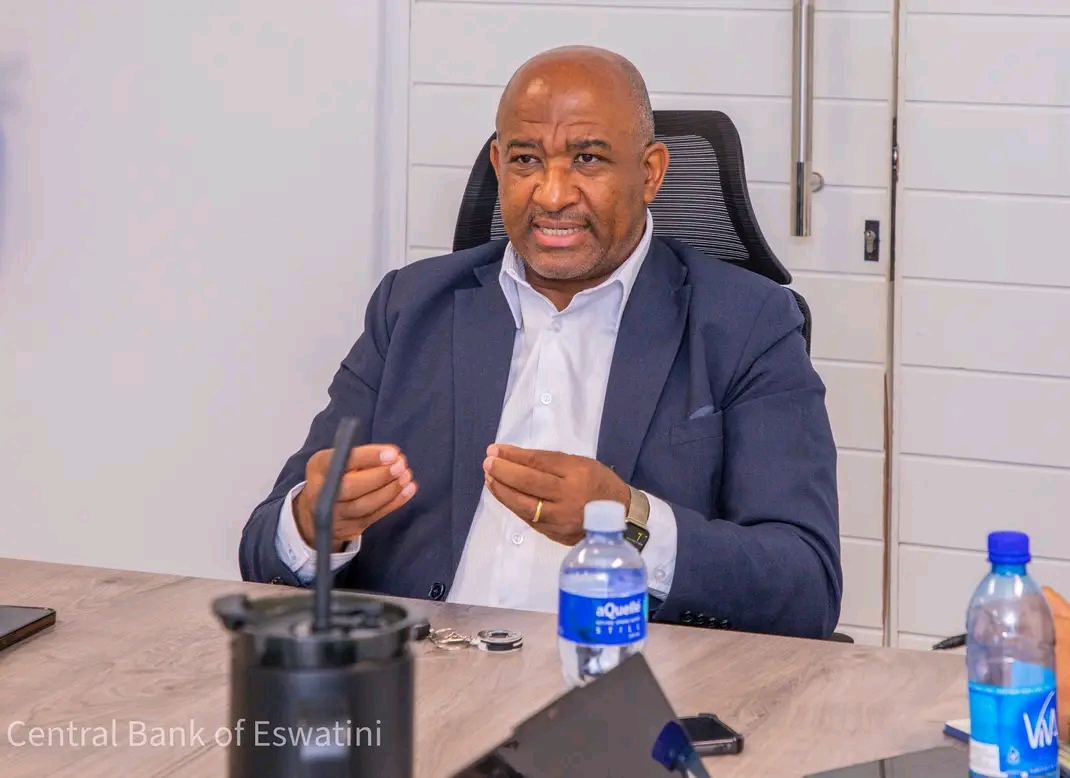
In a major pushback against mounting resource-nationalism sentiment in the domestic market, the Governor of the Central Bank of Eswatini (CBE), Dr. Phil Mnisi, has issued a comprehensive defensive statement regarding public procurement integrity and the participation of foreign-shared companies within the Kingdom.
The high-level intervention, detailed across the official statements, comes in direct response to critical media commentary published in the Times of Eswatini. The reports questioned the inclusion of foreign equity partners in massive state-backed infrastructure projects, most notably the Central Bank’s own multi-billion Emalangeni capital works project.
Dr. Mnisi unequivocally affirmed that shutting out duly registered companies based purely on foreign shareholding—outside of a specific lawful directive—violates constitutional equality and poses a critical threat to investor confidence.
The Legal Framework: Open vs. Protectionist Procurement
Governor Mnisi outlined a stringent matrix of domestic and regional legislation that legally prohibits the arbitrary exclusion of foreign-backed entities in public tenders:
- The Constitution of Eswatini (2005): Enshrines foundational principles of equality before the law and absolute non-discrimination.
- The Public Procurement Act, 2011: Explicitly mandates that public bidding procedures be fair, equitable, transparent, competitive, and cost-effective.
- The Eswatini Investment Promotion Act: Provides statutory promotion and equal protection metrics for both domestic and international capital.
- SADC Protocols on Finance and Investment: Obligates member states to encourage the free regional flow of capital and ensure non-discriminatory treatment of regional investors.
The Bank emphasized that while it fully endorses local citizen economic empowerment, such programs must be executed within established legal bounds, such as targeted capacity building or legally sanctioned local content requirements, rather than through blanket exclusions.
Setting the Record Straight on the E2.79 Billion EPC Contract
Turning directly to the Central Bank’s specific infrastructure project, Governor Mnisi countered widespread rumors with audited operational data:
- Correct Valuation: The Bank confirmed it awarded an Engineering, Procurement, and Construction (EPC) contract valued at E2.79 billion, correcting inaccurate media reports pegging the figure at E2.9 billion.
- The 30% Local Ring-Fence: From the outset, the Request for Proposals (RFP) carried a strict, mandatory requirement for a minimum 30% share to be executed by local construction firms.
- Refusing to Dilute Standards: The Governor revealed that after receiving written requests from local contractors to lower this localized participation threshold to a minimum of 10%, the Central Bank flatly declined. The Bank maintained the strict 30% baseline specifically to enforce meaningful, high-yielding participation for domestic firms.
- Local Bidder Involvement: The top three Eswatini-registered contractors listed in the Construction Industry Council (CIC) registry actively participated in the bid, choosing to enter the race in partnership with international firms.
- Currency & Liquidity Protection: To mitigate external capital drain, the signed contract mandates that the payment currency remains strictly in Emalangeni (SZL), and all disbursements are processed directly into accounts held with local commercial banks.
📈 THE SOURCE VERDICT
THE MACROECONOMIC ANALYSIS: Eswatini operates a highly open economy dependent on South Africa for roughly 70% of imports and 68% of exports. In a tightly integrated financial ecosystem like the Common Monetary Area (CMA), pushing for the summary exclusion of foreign capital is short-sighted and economically dangerous.
THE VERDICT: Governor Dr. Phil Mnisi is entirely correct to call out protectionist narratives that risk alienating foreign direct investment (FDI). The Central Bank’s execution of the E2.79 billion headquarters contract demonstrates the gold standard for balancing international capacity with domestic growth. By holding the line on a mandatory 30% local joint-venture baseline—even when local entities requested it to be dropped to 10%—the CBE ensured that over E830 million stays directly within the domestic construction value chain, while keeping payments anchored in Emalangeni accounts. This isn’t selling out; it is an elite masterclass in market orchestration.
🔔 JOIN THE EXECUTIVE CIRCLE
Never guess where central bank regulations, financial policy changes, or macroeconomic investment updates are heading.
Click the BLUE SUBSCRIBE ICON at the bottom of your screen to join over 100k+ top executives, retailers, and entrepreneurs who rely on The Source for instant corporate metrics, verified national data, and strategic financial analysis.
🔵 CLICK TO SUBSCRIBE & ENABLE NOTIFICATIONS










Advertisement

Related Posts


Stay Informed With the Latest & Most Important News







Advertisement