
Now Reading: THE SQUEEZE AND THE SHIELD: Deconstructing Eswatini’s April 2026 Inflation Trajectory
-
01
THE SQUEEZE AND THE SHIELD: Deconstructing Eswatini’s April 2026 Inflation Trajectory
Advertisement

THE SQUEEZE AND THE SHIELD: Deconstructing Eswatini’s April 2026 Inflation Trajectory

Advertisement
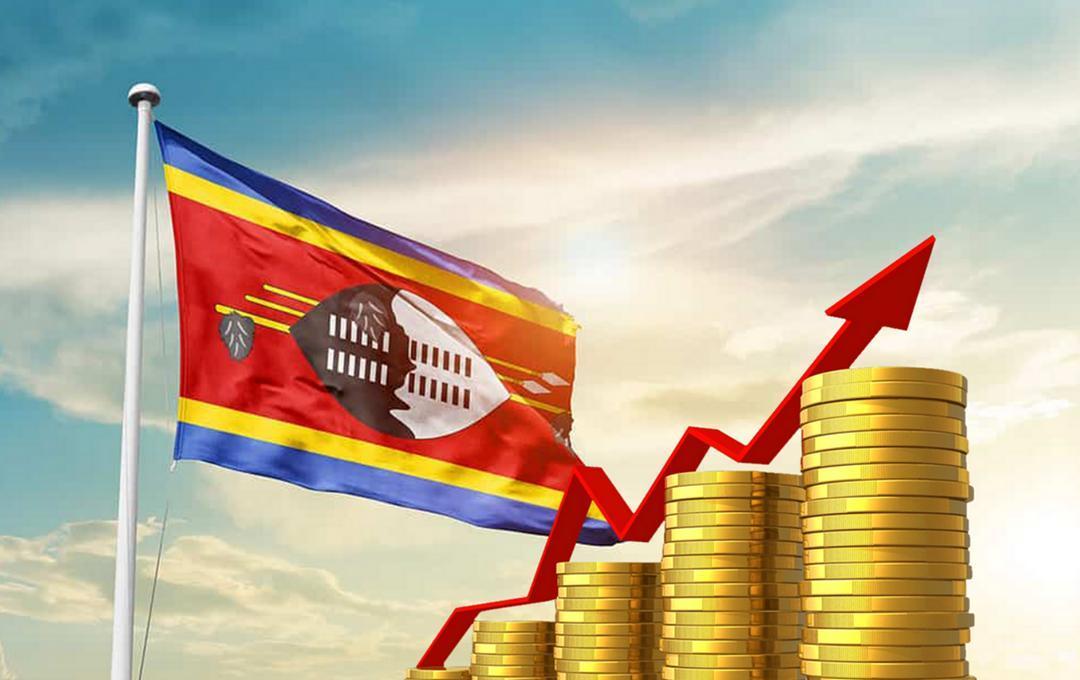
For executives and asset planners navigating Eswatini’s commercial landscape, the latest data out of the Central Statistical Office provides a vital pulse check. The April 2026 Consumer Price Index (CPI) report points to a delicate balancing act within the national economy: a minor upward nudge in headline inflation, masked by a massive shift in underlying commodity dynamics.
Eswatini’s annual headline inflation rate for April 2026 clocked in at 2.0%. While this represents a minor 0.33 percentage point climb from the 1.6% recorded in March 2026, the broader picture shows macro-stability. Crucially, this 2.0% print sits a comfortable 1.3 percentage points lower than the 3.3% rate observed in April 2025.
But as any strategic thinker knows, the headline figure is only a cover story. The real narrative is found by breaking down the core groups driving the index.
1. The Inflation Drivers: Where the Squeeze is Happening
The month-on-month climb was primarily propelled by substantial structural shifts in utility costs and logistics:
- Housing and Utilities (Contributing 1.3%): This sector saw an aggressive monthly spike, jumping from a flat 0.0% in March 2026 to 3.9% in April 2026. The primary culprits? Marked price adjustments in liquid fuels, electricity tariffs, and water supply metrics.
- Transport Logistics (Contributing 0.3%): Transport reversed its deflationary trend, swinging from -0.2% in March up to 2.4% in April. This was almost entirely driven by the volatile “fuels and lubricants” subcategory, signaling higher operational costs for regional distribution networks.
- Clothing and Footwear (Contributing 0.3%): Steady price increases across garments and footwear pinned a 5.2% annual change on this sector, maintaining consistent pressure on consumer retail wallets.
2. The Deflationary Shield: The Agro Relief
Had it not been for a dramatic downward trend in food costs, headline inflation would have tracked significantly higher.
- Food and Non-Alcoholic Beverages: In a remarkable turn of events, annual food inflation dropped from 3.6% in April 2025 all the way down to -0.9% in April 2026. This deflationary buffer was heavily anchored by negative growth rates in foundational staples like bread, cereals, and vegetables.
- Alcohol and Tobacco: Long a high-growth category, slower pricing velocities in beer and wine pulled this index down from a staggering 10.7% last year to a stable 4.4% in April 2026.
- Health Services: Medical services and pharmaceutical indices stabilized completely, tracking at a minimal 0.2% annual change due to zero-growth baselines in medical consultations.
📈 THE SOURCE VERDICT
THE ANALYSIS: Eswatini is experiencing a clear cost-of-living pivot. The structural squeeze is no longer coming from the grocery basket—it has shifted entirely to the grid and the fuel pump. Housing, utilities, and transport collectively accounted for the vast majority of the upward pressure on the CPI.
THE PRIVATE SECTOR TAKEAWAY: For businesses, a negative food inflation rate (-0.9%) frees up residual consumer liquidity, which explains the steady resilience in secondary markets like hospitality, restaurants, and hotels (which nudged up to 1.1% in April). However, commercial margins will face a test from rising utility and fuel costs. Efficiency in corporate logistics is now the ultimate tie-breaker for quarterly profitability.
THE VERDICT: A highly manageable macro-environment. At 2.0% headline inflation, Eswatini remains an incredibly stable, low-risk investment destination within the SADC region. Policymakers have done the heavy lifting to contain catastrophic food spikes; it is now up to private enterprise to optimize logistics against rising utility lines.
🛠️ METHODOLOGY NOTES (The Technical Backing)
To ensure absolute corporate integrity, The Source highlights that the Central Statistical Office compiles this data using international best practices. The index tracks consumer goods and services across all four regions of the Kingdom within the first three weeks of every month.
The metrics are structured according to the international Classification of Individual Consumption according to Purpose (COICOP). Weights are scientifically mathematically derived from the 2016/17 Household Income and Expenditure Survey (HIES) with a June 2020 reference baseline (June\ 2020 = 100). The calculation utilizes a robust geometric Lowe index formula to calculate the upper-level weighted averages, ensuring bulletproof empirical accuracy.
🔔 NAVIGATE THE MACRO ECONOMY WITH PRECISION
When inflation patterns shift, capital migrates. Don’t base your corporate budget on guesswork—base it on hard statistical intelligence.
Click the BLUE SUBSCRIBE ICON at the bottom of your screen to join our network of elite decision-makers who read The Source to protect their wealth and align their business strategies with certified national data.
🔵 CLICK TO SUBSCRIBE & ENABLE NOTIFICATIONS










Advertisement

Related Posts



Stay Informed With the Latest & Most Important News
Previous Post
Next Post








Advertisement